
Last updated September 23, 2026
Free visual inspection and a written scope of work before any mitigation begins - photos, moisture readings, and drying logs go in your claim file
The scope we write is the scope we bill. Anything new gets shown to you, in writing, before we touch it.
 Before
 After
After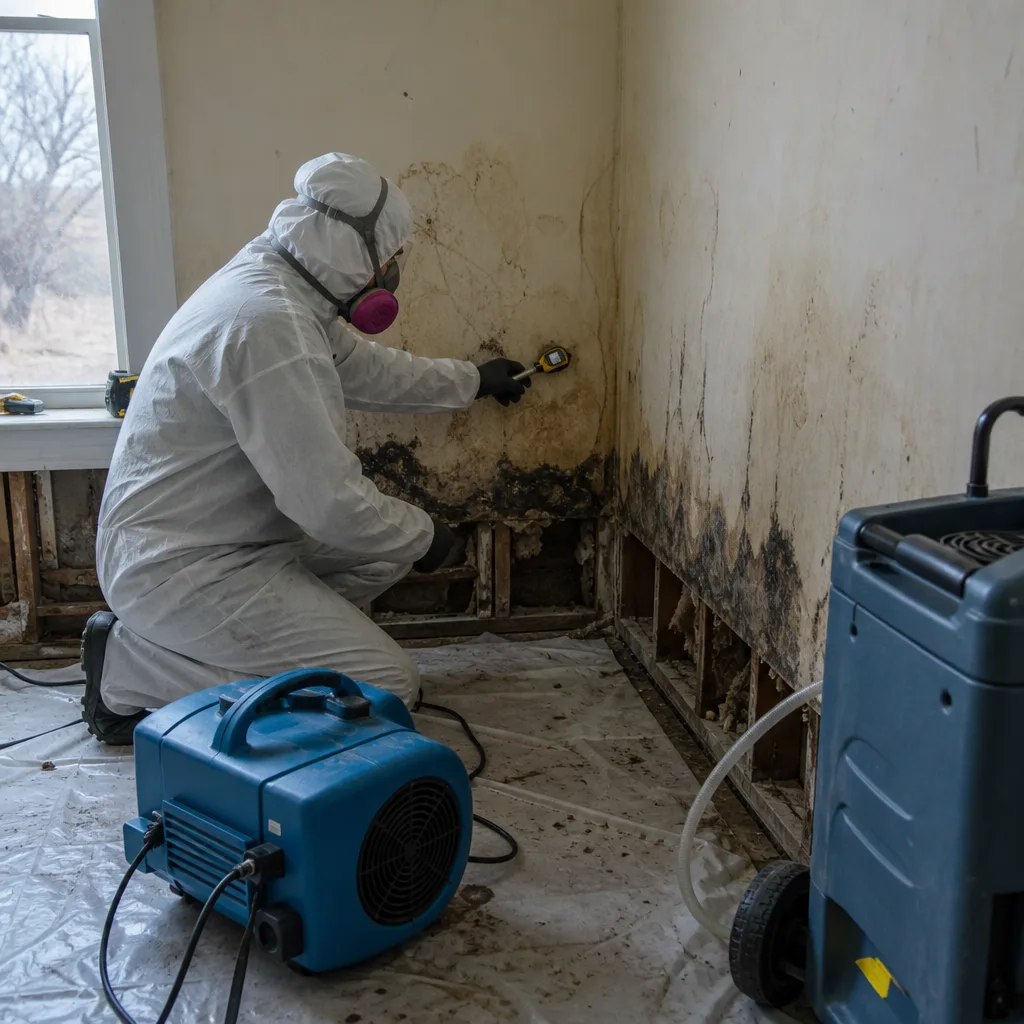 Before
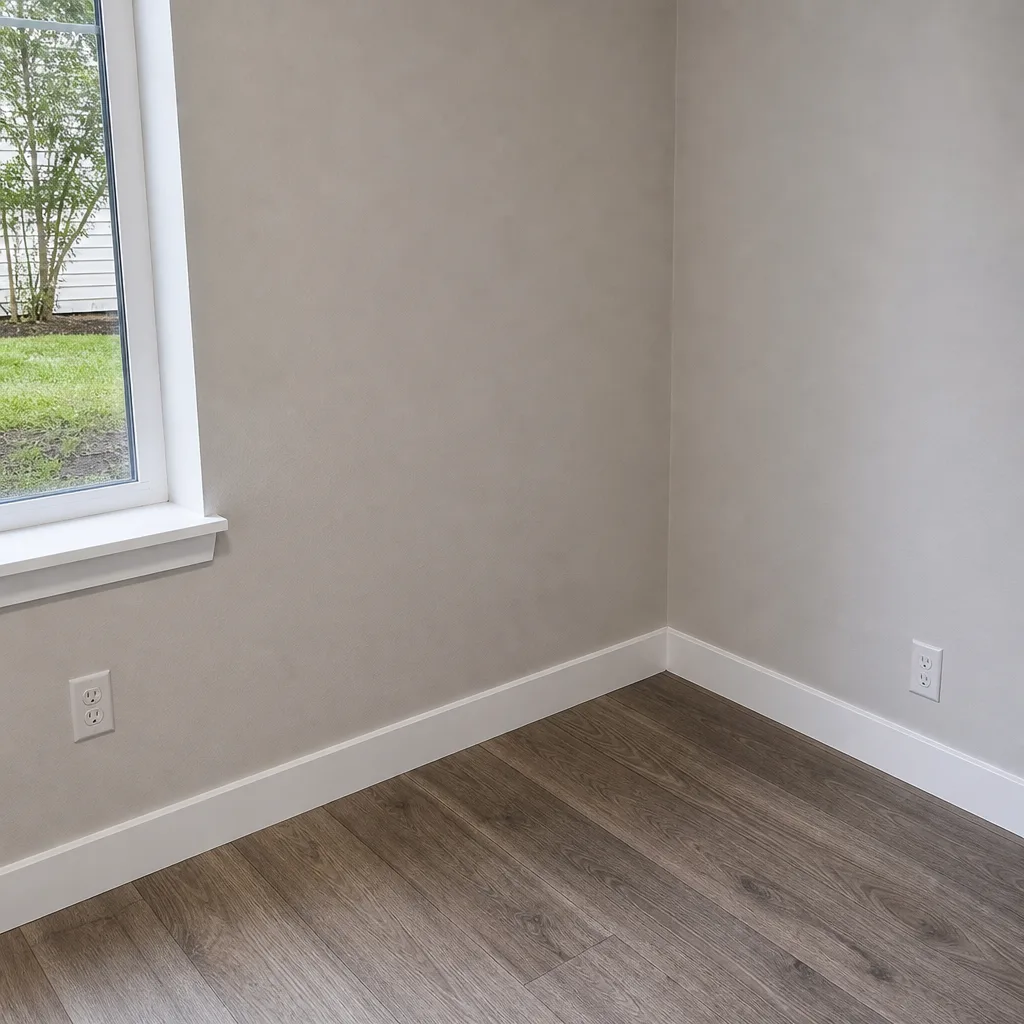 After
After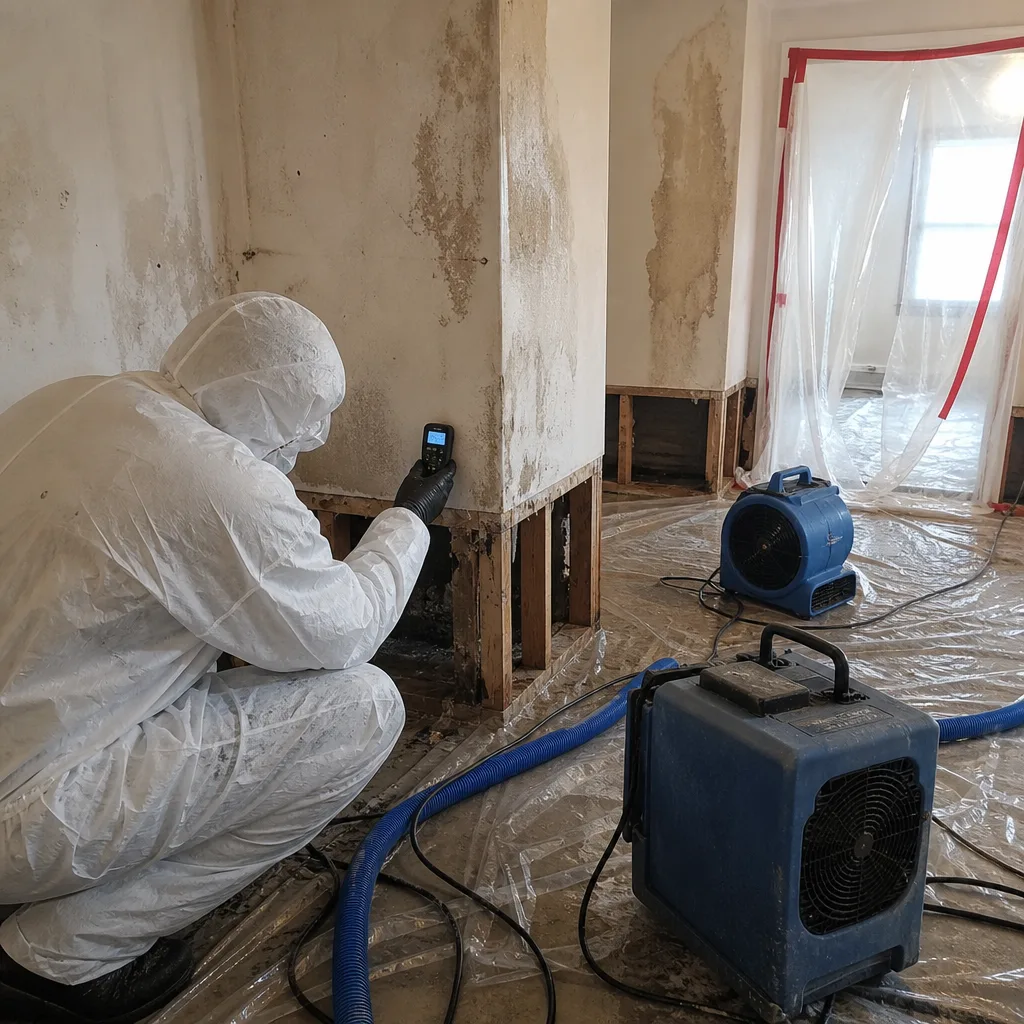 Before
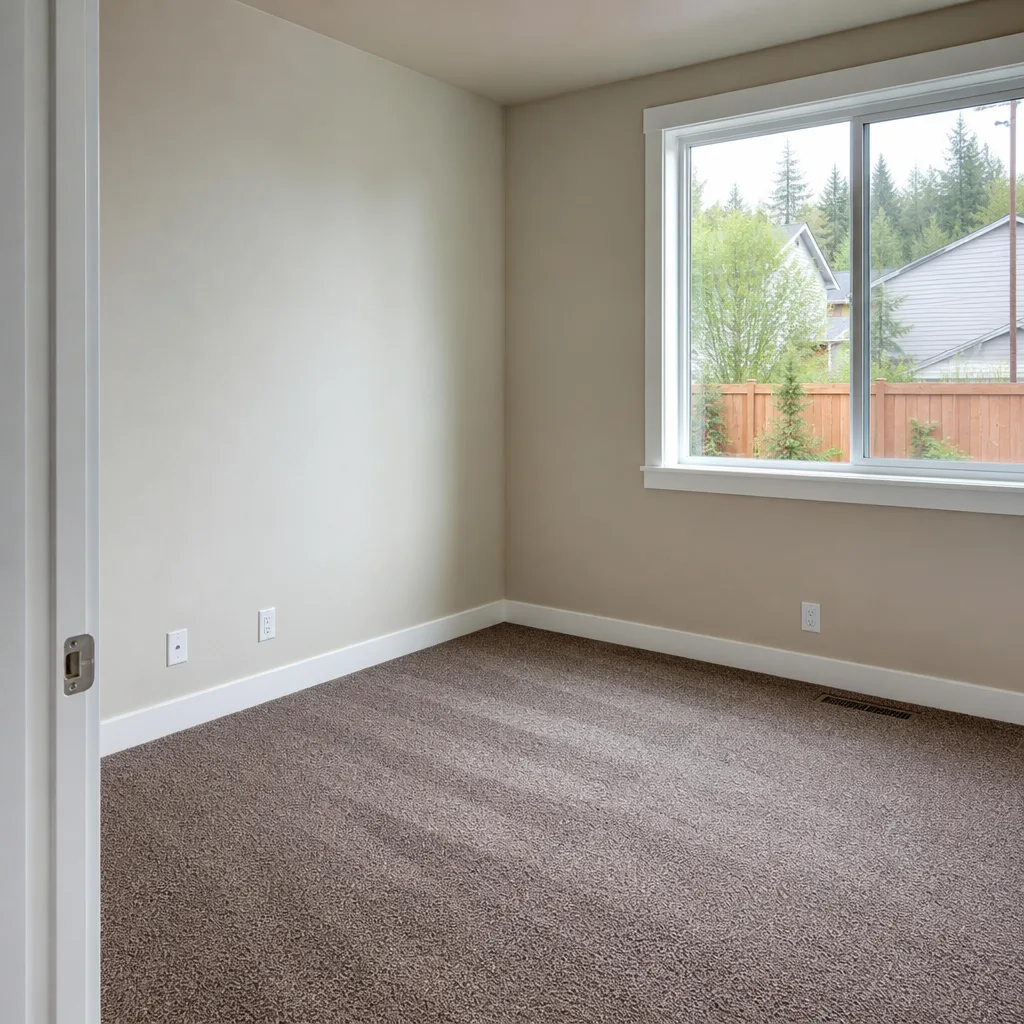 After
AfterDIY vs Professional Damage Restoration: The Marysville Homeowner’s Decision Guide
A homeowner in Marysville who dries a Category 1 water loss with box fans and submits the Home Depot receipt to their insurer may recover $200. The homeowner who calls a documented professional for the same loss and receives a signed drying report may recover the full cost of remediation plus contents. The difference is not skill. It is documentation. In this guide and our Water Damage Restoration Maintenance Checklist for Marysville Homeowners, we’ll map exactly where DIY mitigation is defensible, where it exposes you to claim denial and mold liability, and how to evaluate whether a contractor’s paperwork is actually better than what you could produce yourself.
Quick Answer
DIY damage restoration is defensible only for Category 1 water losses under 150 square feet with no structural materials affected, provided you document dated photos, daily moisture readings with a calibrated meter, and a written drying log. For Category 2 or 3 water losses, fire and smoke damage, mold contamination over 10 square feet, or any loss involving structural cavities, professional handling is required by most Washington insurance policies and Snohomish County building codes. The hidden cost of incomplete DIY drying in Marysville’s marine climate is a mold remediation job averaging $4,000-$18,000 that your insurer may refuse to cover.
Table of Contents
- Water Loss Categories: The Decision Starting Point
- When DIY Is Defensible (And What You Must Document)
- The Hidden Costs DIY Calculators Omit
- When Professional Handling Is Required
- How to Evaluate a Contractor’s Documentation Standard
- What Homeowners Can Safely Handle Themselves
- Marysville’s Marine Climate: Why Drying Takes Longer Here
- Common Mistakes to Avoid
- When to Call a Professional
- Frequently Asked Questions
- The Bottom Line
BeforeAfterWater Loss Categories: The Decision Starting Point
Every restoration decision begins with the IICRC category system. Insurance adjusters in Snohomish County use these categories to determine coverage limits, and contractors use them to set drying strategy. Misidentifying the category is the most common error we see in homeowner self-assessments.
Category 1: Clean Water
Originates from a sanitary source: ruptured supply line, overflowing sink, tub without contaminants, or rainwater intrusion through a compromised roof. Does not pose substantial risk from dermal, ingestion, or inhalation exposure. Time and temperature can degrade Category 1 to Category 2 within 48-72 hours in Marysville’s climate, where indoor relative humidity often sits above 60% even in heated homes.
Category 2: Gray Water
Contains significant contamination and has potential to cause discomfort or sickness if contacted or consumed. Sources include dishwasher discharge, washing machine overflow, toilet overflow with urine but no feces, or sump pump failures. Category 2 requires antimicrobial treatment, specialized extraction equipment, and disposal protocols that exceed homeowner capability in most cases.
Category 3: Black Water
Grossly contaminated, including sewage, seawater, rising surface water, or water from rivers and streams. Category 3 losses are biohazard events. Washington State Department of Health guidelines and Snohomish County code require licensed remediation for Category 3 water intrusion. No DIY approach is defensible.
The category determines everything: equipment selection, dwell time, antimicrobial requirements, disposal protocols, and whether your insurer will recognize the loss as properly mitigated. A homeowner who treats a Category 2 loss as Category 1 and fails to apply antimicrobial treatment has, in the insurer’s view, caused additional damage through negligence. That negligence can void coverage for subsequent mold remediation.
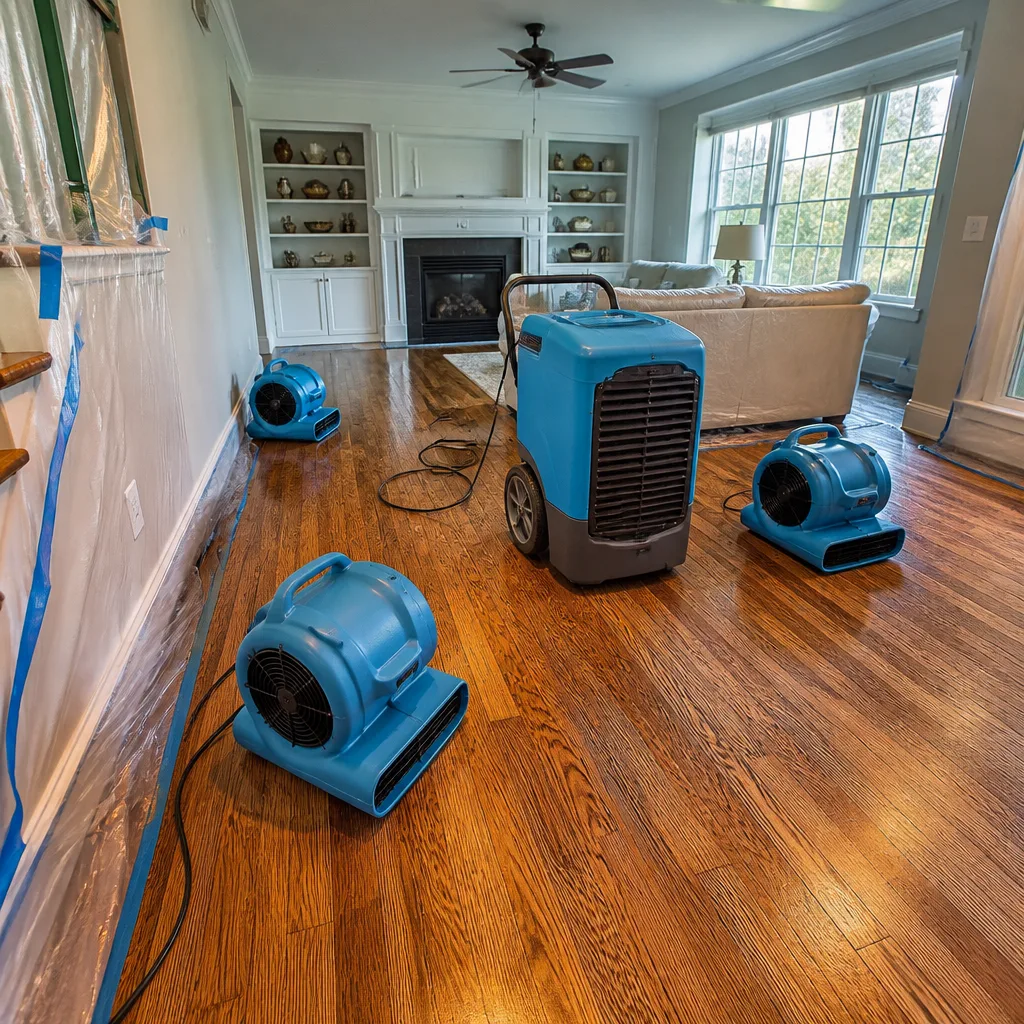
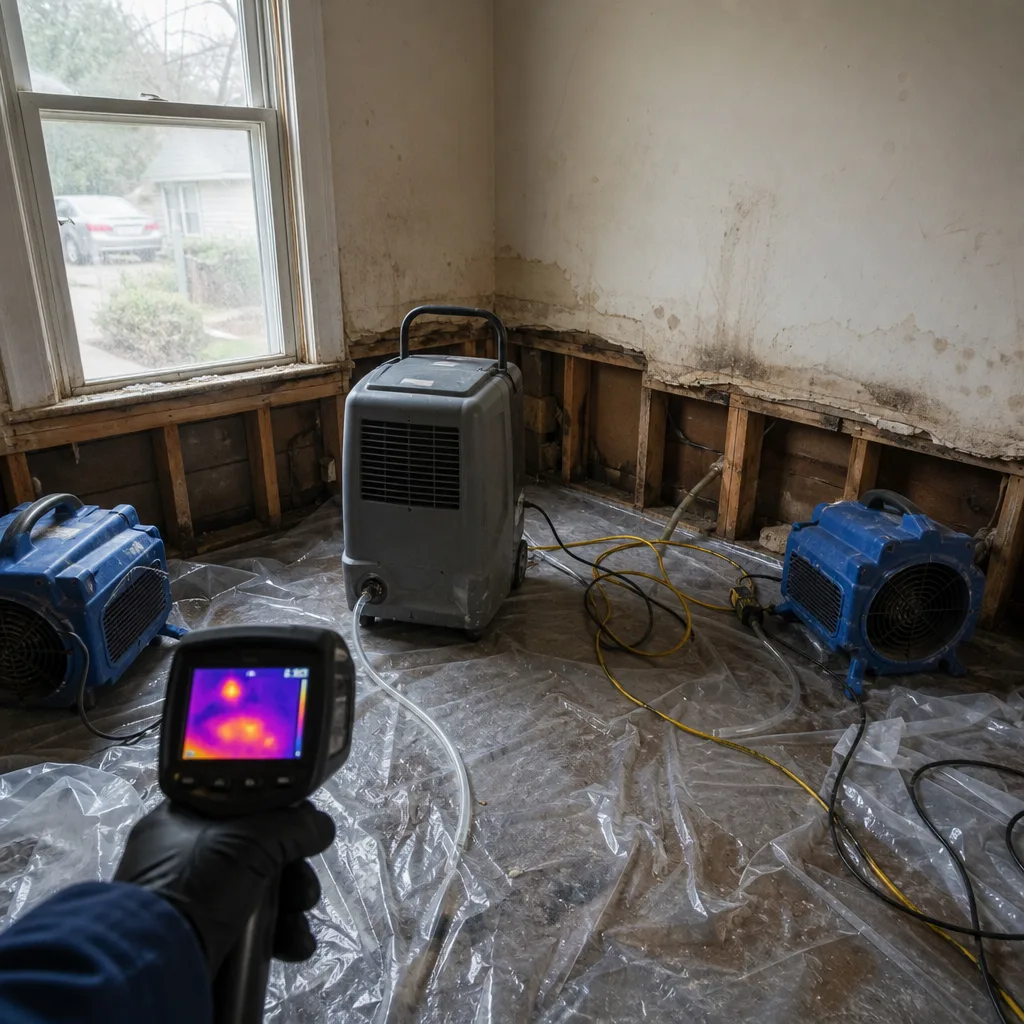
We document category determination with photos of the water source, material sampling, and atmospheric readings at arrival. Our crews use professional-grade drying systems from Dri-Eaz, Phoenix, and XPOWER to establish vapor pressure differential, the measurable force that drives moisture from wet materials into the drying air. Without equipment that can generate and measure this differential, a homeowner is guessing at drying progress.
When DIY Is Defensible (And What You Must Document)
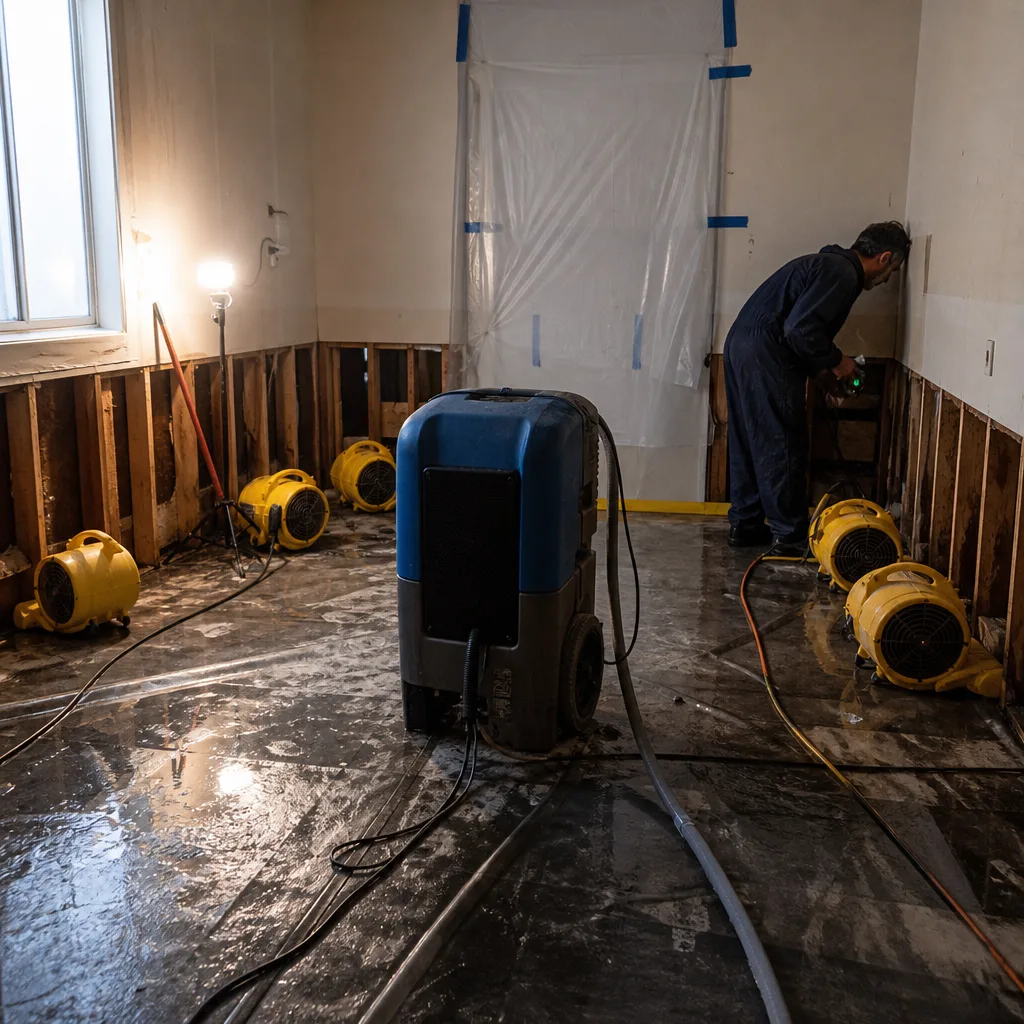
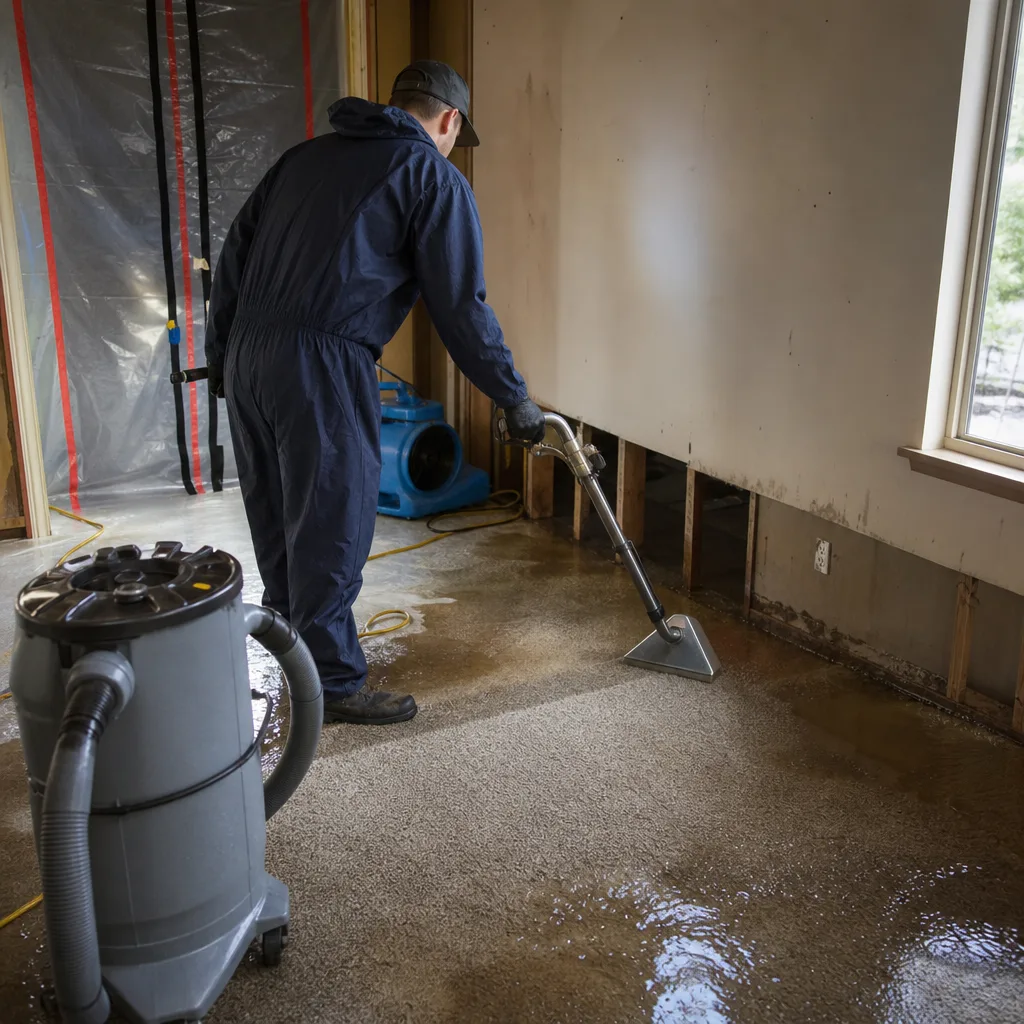
DIY mitigation is legally and financially defensible in a narrow band of circumstances. The loss must be Category 1, affect less than 150 square feet of floor area, involve only surface materials (carpet, pad, vinyl, laminate), and reach no structural cavities. Even then, documentation is not optional. It is the entire basis of your claim.
Here is what a DIY effort must produce to be treated as legitimate mitigation by a Washington State insurer:
- Dated photos before any disturbance. Every affected area, every water line on baseboard, every discolored section of carpet, every damp spot on drywall. Timestamp enabled on your camera. These photos establish the pre-mitigation condition and the extent of the loss.
- A calibrated moisture meter reading. Pinless meters suitable for homeowners cost $50-$120. Take readings at the same points daily, at the same time, recording wood moisture content (WMC) and relative moisture level (RML) for gypsum. A reading above 16% WMC in framing or 1% RML above baseline in drywall indicates continued drying is needed.
- A written drying log with daily entries. Date, time, indoor temperature, relative humidity, equipment running, meter readings by location, and any material removals. This log is your evidence that drying was pursued systematically, not abandoned when surfaces felt dry.
- Receipts for all equipment and materials. Dehumidifier rental, fan purchase, antimicrobial solution, moisture meter, disposal fees. Organized chronologically.
- Final moisture readings at completion. Documented at or below 12% WMC for softwoods, 15% for hardwoods, and return to baseline for gypsum. With Marysville’s ambient humidity, “baseline” often requires a dehumidifier running 72 hours after surfaces appear dry.
Without these five elements, your insurer has no basis to distinguish your effort from abandonment. We have reviewed claims where homeowners spent $800 on equipment and recovered nothing because they had no drying log. The $800 became an out-of-pocket loss on top of the water damage.
One additional factor: Marysville’s water table and soil composition in neighborhoods like Sunnyside and Kellogg Marsh mean slab-on-grade homes experience slower subfloor drying. A moisture meter reading on top of vinyl plank means nothing if the OSB beneath it holds 18% moisture. Professional inspection with a thermal imaging camera finds this. A homeowner’s pinless meter on the surface does not.
The Hidden Costs DIY Calculators Omit
Online DIY cost calculators compare equipment rental against professional service fees. They omit the consequential costs that appear months later, and they never account for claim recovery rates.
The standard calculation looks like this: dehumidifier rental ($150/week), air mover rental ($25/day), antimicrobial ($40), moisture meter ($80), your labor (free). Total: $400-$600 versus a professional dry-out at $1,800-$3,500. The calculator declares savings of $1,200-$2,900.
Here is what the calculator omits:
- Mold remediation triggered by incomplete drying. In Snohomish County, mold remediation for a failed DIY dry-out averages $4,000-$18,000 depending on affected square footage and cavity involvement. This assumes the mold is discovered before structural damage requires reconstruction. Our crews have opened walls in Marysville homes where DIY drying stopped at surface-dry and found Stachybotrys colonization in insulation cavities six months later.
- Claim denial for subsequent damage. Washington insurance policies contain reasonable mitigation clauses. If the insurer determines you failed to take reasonable steps to prevent secondary damage, they may deny the mold claim entirely. A $6,000 mold job becomes a $6,000 out-of-pocket expense.
- Contents replacement not covered. Professional mitigation includes content manipulation, drying, and restoration. DIY efforts rarely address contents systematically. A wet sofa left in place can transfer moisture to flooring, and without documentation, contents losses may be excluded.
- Extended displacement costs. A professional dry-out in Marysville typically completes in 3-5 days. A DIY effort that stalls because equipment is undersized or misapplied can leave a family in temporary housing for weeks. Extended hotel stays are rarely fully recoverable.
- Structural repair from undetected moisture. Floor systems with sustained moisture above 20% WMC begin to degrade. Subfloor replacement in a typical Marysville ranch runs $8,000-$15,000. This is not water damage. It is structural repair, often with a separate and higher deductible.
The documentation gap is the critical variable. A homeowner with a complete photo record, drying log, and final moisture readings can present a defensible claim. Most DIY efforts we encounter have photos on a phone and a vague memory of “running fans for a few days.” That is not documentation. That is evidence of negligence.
When Professional Handling Is Required
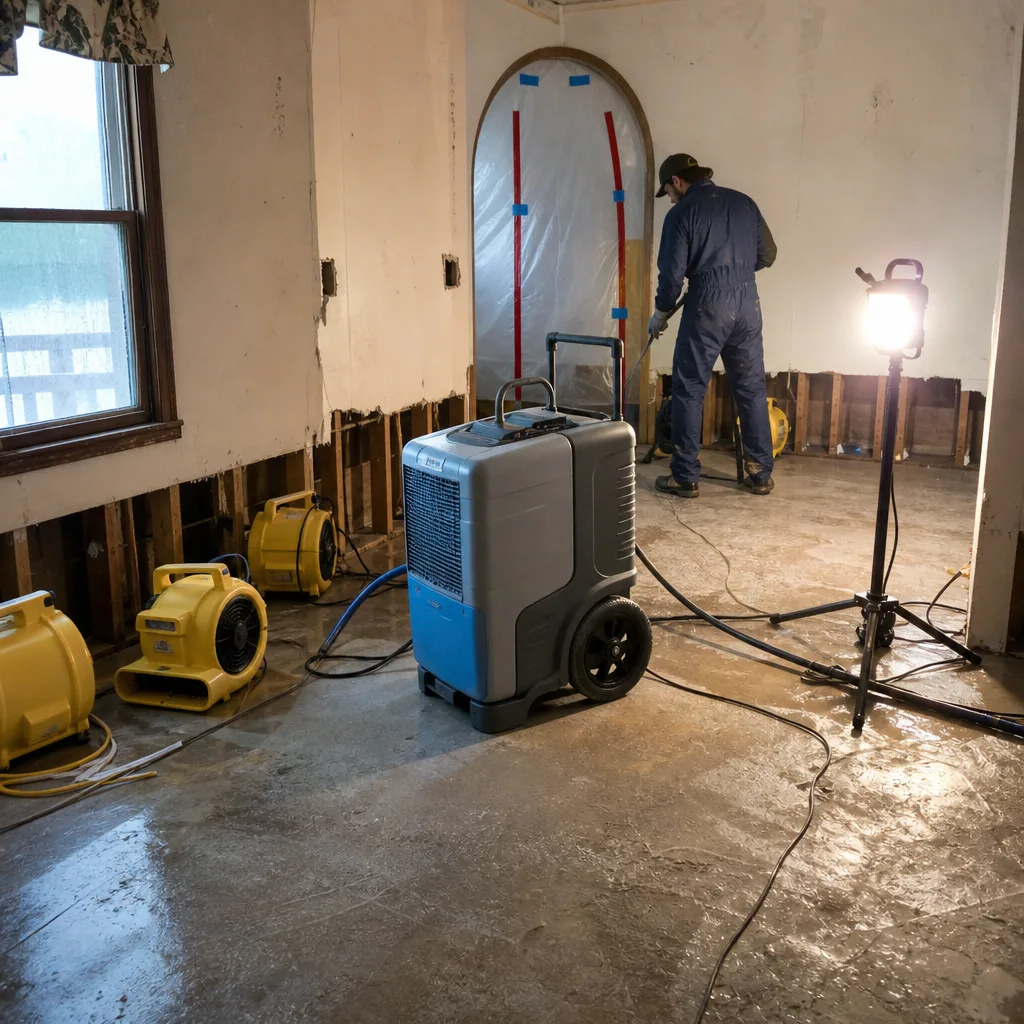
Certain loss types carry requirements that make DIY mitigation inadvisable or impossible under Washington law, Snohomish County code, or standard insurance policy terms.
Category 2 and Category 3 Water Losses
Gray and black water require antimicrobial treatment, specialized PPE, and waste disposal through licensed haulers. Snohomish County Solid Waste does not accept Category 3 materials at standard transfer stations. The homeowner who bags wet carpet from a sewage backup and places it at curbside violates county health regulations and creates liability if a waste worker is exposed.
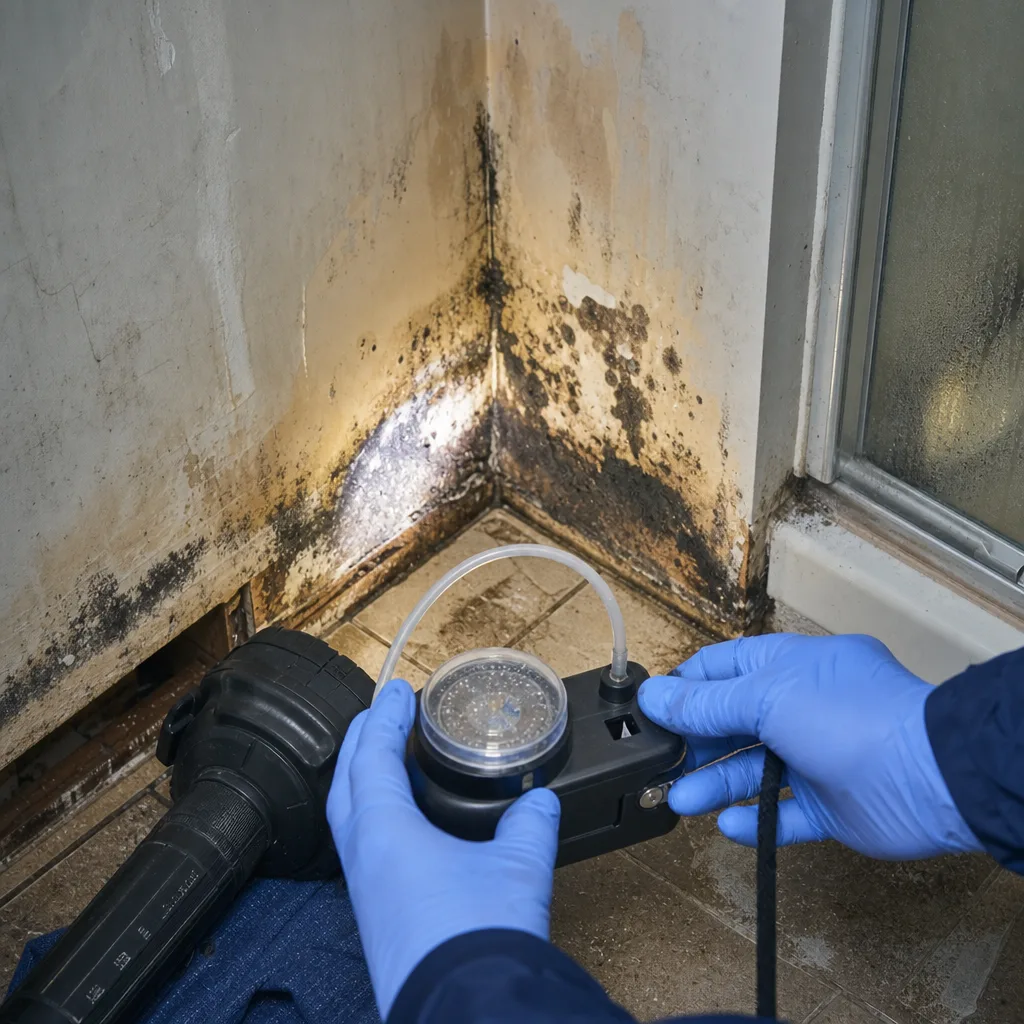
Mold Contamination Exceeding 10 Square Feet
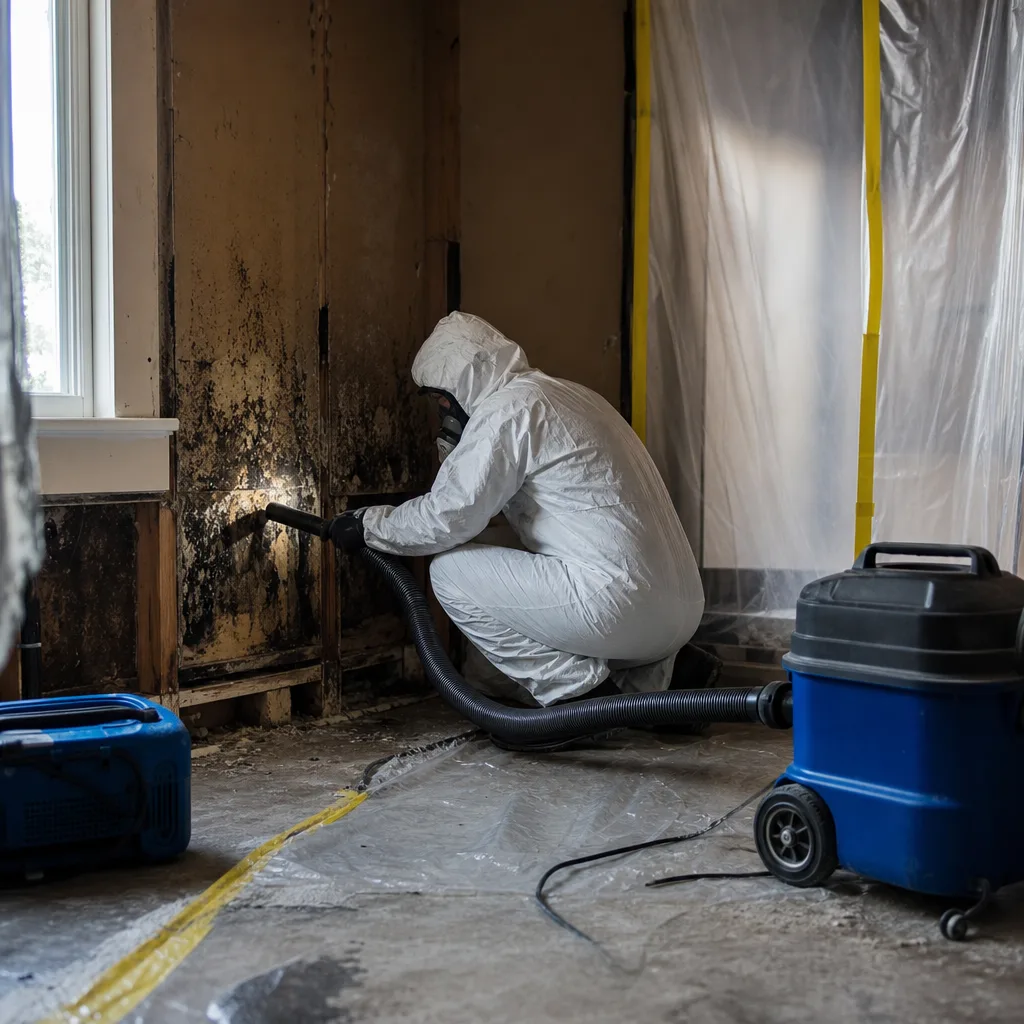
The Washington State Department of Labor and Industries requires licensed remediation for visible mold growth exceeding 10 square feet in residential settings. This threshold is not arbitrary. It reflects the point at containment and negative air pressure become necessary to prevent cross-contamination. A homeowner scrubbing a 15-square-foot patch in a Marysville basement bathroom without containment can spread spores through the HVAC system to the entire home. We address these situations through our Mold Remediation in Marysville service, with documented containment protocols and post-remediation clearance testing.
Fire and Smoke Damage
Smoke residue is chemically active and corrosive. Different fire sources (protein, synthetic, natural) require different cleaning agents and sequences. Improper cleaning can set residues permanently, making professional restoration impossible later. Additionally, structural integrity assessment after fire requires trained evaluation. Our Fire & Smoke Damage Restoration in Marysville includes pre-cleaning testing to identify residue type and a written scope before any work begins, per Haven Standard, Clause 1.
Losses Affecting Structural Cavities
Any water that reaches wall cavities, ceiling plenums, or subfloor spaces requires invasive drying equipment: Injectidry systems, wall cavity ventilators, or controlled demolition with drying access. These tools are not available for homeowner rental. More importantly, the decision of where to drill, what to remove, and how to verify cavity dryness requires training in psychrometrics, the study of air and moisture relationships.
Losses with Insurance Coverage at Stake
If you intend to file a claim, professional documentation is practically mandatory. Adjusters in Snohomish County are trained to scrutinize self-mitigation for evidence of insufficient effort. A professional drying report with daily moisture logs, equipment readings, and material classifications is the standard of proof. Without it, you are asking the adjuster to trust your judgment. They are not paid to trust homeowners.
How to Evaluate a Contractor’s Documentation Standard
Hiring a professional who produces no better documentation than a careful homeowner is a waste of money. Many restoration companies in the Marysville market emphasize speed and empathy while treating paperwork as an afterthought, so consult our How to Hire a Damage Restoration Contractor in Marysville: A Step-by-Step Guide before deciding. Here is how to determine whether a contractor’s documentation standard justifies their fee.
Ask for sample deliverables before signing. A legitimate documentation-first company can show you a redacted drying log, photo report, and written scope from a previous job. If they cannot produce these, their “documentation” may consist of a one-page invoice and a verbal assurance.
Verify daily moisture logging. The drying log should record: date and time of each visit, equipment deployed by serial number, atmospheric readings (temperature, relative humidity, dew point), moisture content readings by location with material type specified, and psychrometric calculations showing progress toward drying goals. A log with one reading on day one and a “complete” notation on day three is inadequate.
Confirm photo documentation standards. Every visit should produce dated, geotagged photos of equipment placement, moisture readings, affected materials, and any changes to the work area. These photos should be delivered to you, not retained solely by the contractor.
Review the written scope format. Haven Standard, Clause 1 requires a written price before work begins. The scope should itemize: affected areas by room, material classifications, equipment types and quantities, labor hours by task, antimicrobial applications, content handling, and disposal. Vague line items like “dry out basement” or “mold treatment” are unacceptable. You are entitled to know what work will be performed, in what sequence, at what price, before anyone starts.
Check warranty documentation. A verbal “we guarantee our work” is not a warranty. The 365-Day Done Right Promise should appear as a signed document with specific terms: what is covered, what triggers a callback, response time for warranty service, and any exclusions. At DryMark Restoration Marysville, this is a standard deliverable on every job, not a marketing claim.
Ask about adjuster coordination. Documentation that sits in a contractor’s file does not help your claim. The contractor should offer direct adjuster communication, photo sharing to the claim file, and explanation of drying logs on request. We provide this as standard practice; it is the reason Alicia Brennan founded the company after seeing claims denied for documentation gaps.
A contractor who balks at these questions, who describes their process as “trust us, we’ve done thousands,” or who promises to “handle everything with the insurance” without showing you what they will produce, is not selling documentation. They are selling reassurance. Reassurance does not pay claims.
What Homeowners Can Safely Handle Themselves
Even when professional mitigation is required, there are tasks a homeowner can perform safely and effectively. These tasks reduce professional labor costs and, more importantly, prevent additional damage before the crew arrives.
Content Relocation
Moving unaffected contents from the loss area to a dry, ventilated space is always appropriate. Document each item with a photo before moving. Note pre-existing damage. This documentation protects both you and the restoration contractor from contents disputes later.
Temporary Protection of Undamaged Materials
Plastic sheeting over unaffected flooring, foam blocks under furniture legs in wet areas, and aluminum foil under wood furniture on wet carpet are standard protective measures. These prevent stain transfer and moisture wicking while waiting for professional equipment.
Source Control
Stopping the water source is the homeowner’s first responsibility. Shut off the supply valve, engage the sump pump, or place a bucket under the active leak. Do not attempt repairs beyond valve operation. Document the source and your control measure with photos.
Information Gathering for the Adjuster
Collect: insurance policy number, agent contact, mortgage servicer (who must be named on checks over a threshold), and any prior loss history at the address. This information accelerates claim setup and prevents delays.
What Homeowners Should Not Attempt
Do not remove baseboards or drill walls to “help drying.” Uncontrolled penetration of wall cavities releases moisture into dry areas and creates repair obligations. Do not apply antimicrobial solutions without training; misapplication can damage materials and create health hazards. Do not operate electrical equipment in standing water. Do not enter confined spaces with Category 2 or 3 water without proper respirator protection.
In our experience, the homeowner who focuses on documentation, content protection, and source control while leaving structural drying to professionals achieves the best claim outcome and the fastest return to normal.
Marysville’s Marine Climate: Why Drying Takes Longer Here
Marysville sits in the Puget Sound lowlands with a marine west coast climate that directly affects restoration timelines. Understanding these conditions-covered in depth in our Seasonal Damage Restoration Care for Marysville: Year-Round Homeowner’s Guide-explains why DIY drying often fails and why professional equipment selection matters.
Annual precipitation in Marysville exceeds 40 inches, with November through March bringing sustained wet periods. Outdoor relative humidity regularly reaches 85-95% during these months. A homeowner running box fans without dehumidification is pushing saturated outdoor air across wet materials. The air cannot absorb additional moisture. Drying stalls.
Indoor conditions in Marysville homes compound the challenge. Many residences built between 1970 and 2000 lack adequate vapor barriers in crawl spaces. Ground moisture migrates upward through the building envelope, elevating baseline humidity. A professional dry-out must account for this background moisture load, sizing dehumidification capacity to remove both the loss moisture and the environmental contribution.
Temperature is another factor. Optimal drying occurs at 70-80°F with low relative humidity. Marysville’s winter indoor temperatures, often held at 65-68°F for economy, slow evaporation rates. Professional crews use directed heat as part of the drying system, not just air movement. This requires equipment with thermostatic control and safety shutoffs that rental units lack.
The marine layer effect is particularly pronounced in neighborhoods near Ebey Slough and Quilceda Creek, where morning fog penetrates building envelopes through gaps in siding and window seals. Homes in these areas require longer drying cycles and more aggressive vapor pressure differential management. We have documented drying jobs in Sunnyside that required 40% more dehumidification capacity than identical floor plans in higher-elevation Kellogg Marsh due to this microclimate effect.
Finally, Marysville’s clay-heavy soils in the eastern development areas create slab moisture issues. A broken supply line in a slab-on-grade home does not just wet the floor. It saturates the soil beneath, which acts as a moisture reservoir feeding back into the structure. Surface drying is meaningless in these conditions. Professional drying requires sub-slab depressurization or extended drying cycles with moisture monitoring at slab level.
Common Mistakes to Avoid
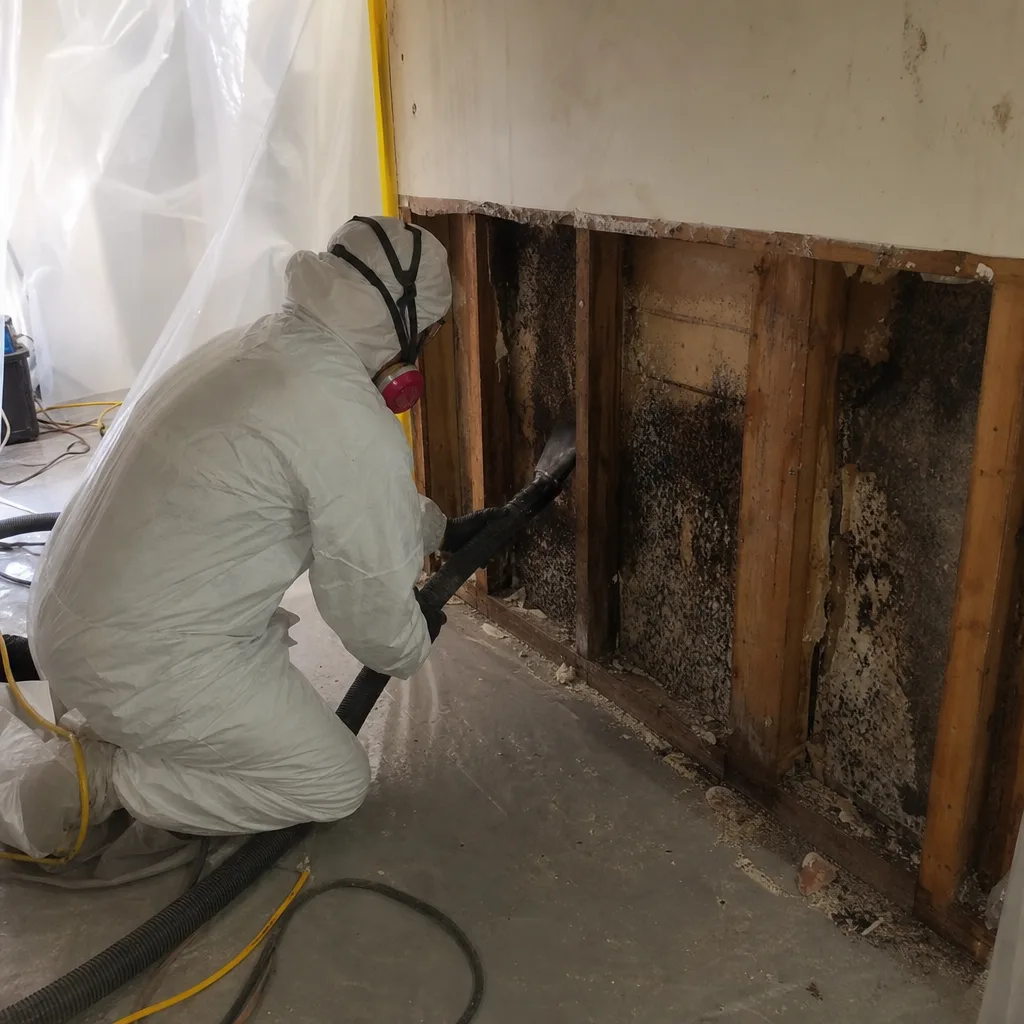
- Treating surface dryness as complete drying. Drywall can feel dry to touch while holding 18% moisture in the core. Vinyl plank flooring can appear unaffected while the OSB beneath it degrades. Always verify with a calibrated meter at multiple depths.
- Using household fans as air movers. A box fan moves air at 1,000-2,000 CFM with no directional control. Professional air movers from XPOWER and B-Air deliver 3,000-4,000 CFM at a 45-degree angle to the surface, creating the turbulent airflow that accelerates evaporation. The equipment is not interchangeable.
- Ignoring Marysville’s ambient humidity. Running air movement without dehumidification in a climate where outdoor air holds 10-15 grains of moisture per pound is futile. The air reaching your wet carpet is already nearly saturated.
- Failing to document before touching anything. The first photos establish the loss condition. Once you move furniture, extract water, or cut drywall, you have altered the scene. Insurers have denied claims where the homeowner’s “help” destroyed evidence of the original loss extent.
- Assuming insurance covers DIY mistakes. Most Washington policies cover sudden and accidental water damage, not damage caused by negligent or incomplete mitigation. A DIY dry-out that leads to mold is frequently classified as the latter.
- Hiring a contractor who won’t show documentation. Speed and sympathy are not substitutes for drying logs. A contractor who arrives fast, acts concerned, and leaves with a handshake has provided nothing your insurer will recognize.
- Waiting to see if it gets worse. In Marysville’s climate, Category 1 water degrades to Category 2 in 48-72 hours. The decision to call a professional should be made within hours, not days. Every day of delay increases mitigation cost and claim complexity.
When to Call a Professional
Call a professional immediately for: any Category 2 or 3 water loss; any loss affecting wall cavities, ceilings, or subfloor spaces; any fire or smoke damage; visible mold exceeding 10 square feet; any loss where insurance coverage will be sought; or any situation where you cannot produce daily moisture documentation with a calibrated meter. For more guides & resources, visit our blog.
DryMark Restoration Marysville offers free estimates in Marysville. Our live phone coverage is available 24 hours a day, 7 days a week with no voicemail on emergency lines. Every job is quoted in writing before work begins, documented with a photo record on every visit, and covered by the 365-Day Done Right Promise under The Haven Standard. We also provide a Free Second Opinion on any competitor’s written estimate at no charge. Call (360) 822-3055.
Frequently Asked Questions
Professional dry-out for a typical Category 1 water loss in Marysville ranges from $1,800-$3,500 for areas under 500 square feet, while Category 2 losses with antimicrobial treatment run $2,800-$5,500. Category 3 sewage losses start at $4,500 due to disposal requirements and PPE protocols. These ranges assume standard ceiling heights and accessible crawl spaces; homes in Marysville’s older neighborhoods with finished basements or limited access may require additional controlled demolition. Every job receives a written price before work begins under Haven Standard, Clause 1. Call (360) 822-3055 for an exact quote - estimates are free.
Your insurer may reimburse equipment purchases for documented DIY mitigation, but recovery is typically limited to actual expenses with no allowance for labor or consequential damages. More critically, if the DIY effort is later determined insufficient and mold or structural damage results, the insurer may deny subsequent claims under reasonable mitigation clauses. Professional mitigation with daily drying logs, photo documentation, and material classifications produces recoverable invoices that average 3-5 times higher than DIY equipment receipts, with full coverage of secondary damage if it occurs.
Our live dispatch answers every call, 24 hours a day, 7 days a week, with no voicemail trees. Emergency response times in Marysville proper average 45-90 minutes depending on traffic conditions on I-5 and State Route 9. Neighborhoods west of I-5 toward Ebey Slough may experience slightly longer response during peak commute hours. For non-emergency assessments, we schedule within 24 hours. The critical factor is not our arrival time but what we produce when we arrive: a written scope, a documented photo record, and a drying plan with measurable targets. Call (360) 822-3055 to confirm current response times.
For visible mold growth under 10 square feet on a non-porous surface with no HVAC involvement, homeowner cleaning with appropriate PPE and an EPA-registered product is defensible. Growth exceeding 10 square feet, any growth on porous materials like drywall or insulation, or any growth in proximity to HVAC intakes requires licensed remediation under Washington State guidelines. The threshold exists because larger areas require containment and negative air pressure to prevent spore dispersal. We have remediated Marysville homes where homeowner cleaning of a 12-square-foot patch released spores throughout the duct system, turning a $2,400 job into a $9,000 whole-house remediation. Our DryMark Restoration Marysville home page details our containment protocols.
The homeowner retains final responsibility for the claim, but a documentation-first restoration company should handle direct adjuster communication as a standard service. At DryMark Restoration Marysville, we provide drying logs, photo records, and material classifications directly to the adjuster upon authorization, and we are available to explain our documentation by phone or in person. This coordination is included in our service, not billed as an add-on. The homeowner’s role is to authorize information release and review settlement offers. Never hire a contractor who asks you to “handle the insurance stuff” while they focus on the work. That division guarantees documentation gaps.
Professional-grade drying equipment includes dehumidifiers from Dri-Eaz and Phoenix, air movers from XPOWER and B-Air, and specialized cavity drying systems from Injectidry. These manufacturers produce equipment with documented performance specifications that support IICRC drying standards. Rental-grade or consumer equipment lacks the capacity, durability, and measurement integration for documented commercial drying. When evaluating a contractor, ask for equipment model numbers and verify they match professional lines. A contractor using unmarked or consumer-grade equipment is not producing documentation-grade results regardless of their paperwork.
The Bottom Line
The DIY-versus-professional question is not about your capability. It is about what you are willing to document and warrant. A careful homeowner with a calibrated meter, a photo protocol, and a daily drying log can mitigate a small Category 1 loss defensibly. That same homeowner, attempting a Category 2 loss without antimicrobial training or a Category 3 loss without biohazard credentials, exposes themselves to claim denial, health liability, and costs that dwarf any equipment rental savings.
The more important question is whether your chosen professional produces documentation that exceeds what you could generate yourself. A contractor without daily moisture logs, without dated photo records, without a written scope before work begins under Haven Standard, Clause 1, is not providing professional mitigation. They are providing labor with a logo. The documentation gap that costs homeowners their claims is the problem Alicia Brennan built this company to solve.
Evaluate your loss honestly by category and extent. Document everything if you proceed alone. Demand documentation from any contractor you consider. And recognize that in Marysville’s marine climate, the cost of incomplete drying is not a hypothetical risk. It is a mold remediation job that your insurer may refuse to cover.
Written by Alicia Brennan, Owner at DryMark Restoration Marysville, serving Marysville since 2011.